

Introduction
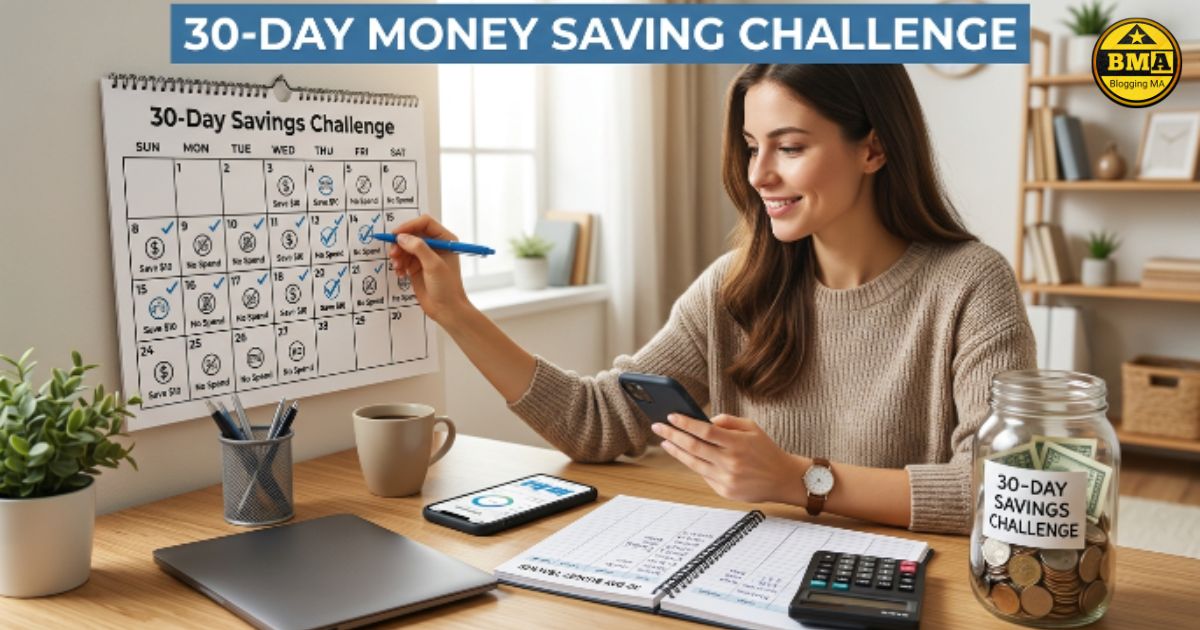
The 30-Day Money Saving Challenge is a simple but powerful method designed to help you control your spending, build discipline, and start saving money quickly within just one month.
Most people struggle to save money because they do not have a structured plan. This challenge solves that problem by giving you a daily action system that helps you track spending, reduce waste, and gradually build savings habits.
Whether you are a student, employee, or beginner in personal finance, this challenge can help you reset your financial behavior in just 30 days.
What is the 30-Day Money Saving Challenge?
This challenge is a 30-day structured plan where you follow daily financial tasks focused on saving money, reducing unnecessary expenses, and improving budgeting habits.
The goal is not just to save money temporarily, but to train your brain to develop long-term financial discipline.
Read Also: 12 Powerful Life Rules for Peace and Success
How the Challenge Works
Each day of the challenge has a small task related to:
- reducing expenses
- tracking money
- avoiding unnecessary spending
- building savings habits
- improving financial awareness
By the end of 30 days, you will have:
- saved money
- reduced bad spending habits
- improved financial control
Week 1: Track and Control Spending
Day 1–3: Track Every Expense
Write down everything you spend money on. Even small purchases like snacks or coffee should be recorded.
Day 4–5: Identify Wasteful Spending
Analyze your expenses and find unnecessary spending habits.
Day 6–7: Set a Simple Budget
Divide your income into:
- needs
- wants
- savings
This gives you financial clarity.
Week 2: Cut Unnecessary Expenses
Read Also: Passive Income Ideas for Beginners
Day 8–10: Reduce Non-Essential Spending
Avoid unnecessary shopping, food delivery, and impulse purchases.
Day 11–12: Cancel Unused Subscriptions
Remove subscriptions you don’t use regularly.
Day 13–14: Cook at Home
Start reducing outside food expenses by cooking simple meals at home.
Week 3: Build Saving Habits
Day 15–17: Save First Rule
Save a small amount immediately after receiving money.
Day 18–19: 24-Hour Rule
Wait 24 hours before making any non-essential purchase.
Day 20–21: Set Savings Goal
Define a clear financial goal like emergency fund or travel savings.
Week 4: Strengthen Financial Discipline
Day 22–24: Avoid Emotional Spending
Stop buying things based on emotions or social pressure.
Day 25–26: Find Extra Income Ideas
Explore small side income options like freelancing or online work.
Day 27–28: Review Your Progress
Check how much you saved and what habits changed.
Day 29–30: Create Long-Term Plan
Turn your 30-day challenge into a monthly saving system.
Read Also: How to Save Money Fast on a Low Income
Benefits of the 30-Day Money Saving Challenge
- Improves financial discipline
- Helps build emergency savings
- Reduces unnecessary expenses
- Creates awareness about spending habits
- Builds long-term saving mindset
Common Mistakes to Avoid
- Giving up after a few days
- Not tracking expenses properly
- Ignoring small purchases
- Setting unrealistic saving goals
- Not following the plan consistently
Tips for Success
- Start with small savings goals
- Stay consistent daily
- Track progress regularly
- Avoid impulse spending
- Focus on habits, not just money
Read Also: 15 Ways To Stay Focused All Day
FAQs
- What is the 30-Day Money Saving Challenge?
It is a structured 30-day plan designed to help you save money and improve financial habits.
- Can I save money in 30 days?
Yes, even small changes in spending habits can help you save money within 30 days.
- Is this challenge good for beginners?
Yes, it is designed specifically for beginners with simple daily tasks.
- How much money can I save?
It depends on your income and discipline, but most people notice visible savings.
- Do I need investment for this challenge?
No, it focuses on saving money through better habits, not investment.
Conclusion
The 30-Day Money Saving Challenge is a practical way to take control of your finances in a short time. It does not require high income or complex strategies—only discipline and consistency.
By following this challenge, you can build strong financial habits that will benefit you for life.